
Introduction
Going on a road trip is one of the most exciting ways to explore new destinations, enjoy beautiful landscapes, and create unforgettable memories with family and friends. Whether you are planning a weekend getaway, a long-distance journey, or a mountain adventure, travelling by road gives you the freedom to explore places at your own pace.
However, a successful road trip requires proper planning and preparation. Carrying the right essentials can make your journey safer, more comfortable, and stress-free. From important documents and first-aid supplies to snacks and navigation tools, every item plays an important role during your journey.
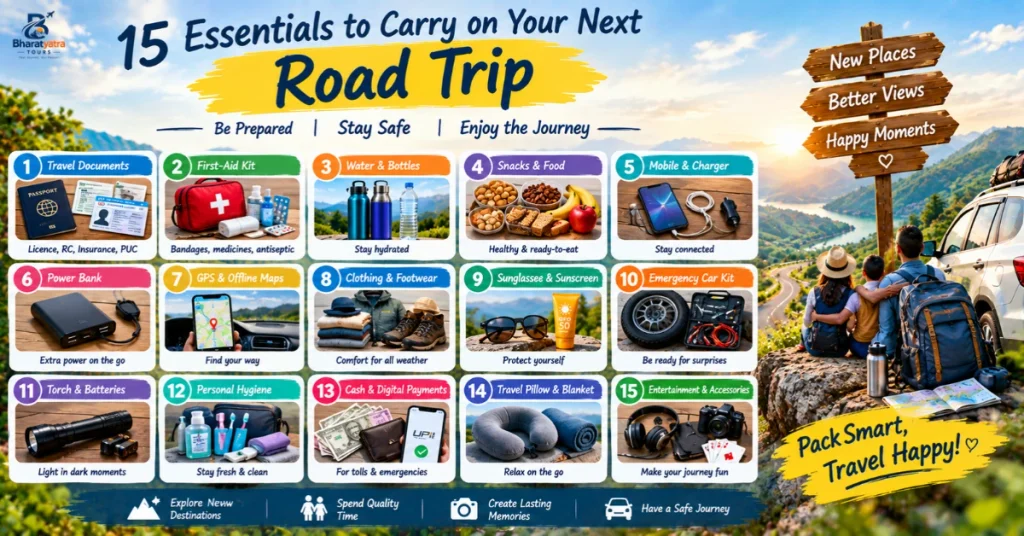
In this blog, Bharat Yatra Tours shares 15 essential things you should carry before starting your next road trip.
1. Important Travel Documents
Always carry your essential documents before starting your journey. These include your driving licence, vehicle registration certificate (RC), insurance papers, and Pollution Under Control (PUC) certificate. If you are travelling in a rented or commercial vehicle, keep the necessary vehicle and booking documents available.
Keep digital copies of important documents on your smartphone as a backup.
2. First-Aid Kit
A first-aid kit is one of the most important items for every road trip. Minor injuries, headaches, or unexpected health issues can happen during travel. Carry basic medical supplies such as bandages, antiseptic wipes, cotton, gauze, and any personal medicines you may need.
Check the expiry dates of medicines before travelling and keep the kit in an easily accessible place.
3. Drinking Water and Reusable Bottles
Staying hydrated is important, especially during long journeys and summer road trips. Carry enough drinking water for everyone travelling with you. Reusable water bottles are a convenient and environmentally friendly option.
You can also carry electrolyte solutions for additional hydration when required.
4. Snacks and Ready-to-Eat Food
Long road journeys often involve travelling through areas where restaurants and food shops may not be easily available. Carry healthy snacks such as dry fruits, biscuits, fruits, energy bars, and sandwiches.
Avoid carrying food that spoils quickly, especially during hot weather. Keep snacks in an organised food bag for easy access.
5. Mobile Phone and Charger
Your smartphone is an essential travel companion. It helps you navigate routes, make emergency calls, book accommodation, and capture memorable photographs.
Always carry your phone charger and a car charging adapter. Make sure your phone has sufficient battery before starting your journey.
6. Power Bank
A power bank is extremely useful when travelling long distances, especially when charging facilities are unavailable. It helps keep your smartphone and other small electronic devices charged.
Choose a reliable power bank with sufficient capacity and charge it fully before leaving home.
7. GPS and Offline Maps
Navigation is essential when exploring unfamiliar destinations. Google Maps and other navigation applications can help you find the shortest routes, nearby restaurants, petrol pumps, and tourist attractions.
However, network connectivity may be weak in remote areas and hill stations. Download offline maps before travelling so you can navigate even without an internet connection.
8. Comfortable Clothing and Extra Footwear
Choose comfortable clothes according to your destination and weather conditions. Carry extra clothes, socks, and comfortable footwear for walking and sightseeing.
If you are travelling to hill stations such as Manali or Shimla, pack warm jackets, sweaters, and appropriate footwear. For summer destinations, lightweight cotton clothes are a good choice.
9. Sunglasses and Sunscreen
Protecting yourself from sunlight is important during long road trips. Sunglasses help reduce glare, while sunscreen protects your skin from harmful UV rays.
Carry a good-quality sunscreen and apply it according to its instructions. Sunglasses are especially useful during daytime sightseeing and outdoor activities.
10. Emergency Car Repair Kit
Vehicle problems can happen unexpectedly during a road trip. Carry basic emergency equipment such as a spare tyre, jack, wheel spanner, tyre inflator, jumper cables, and a basic toolkit.
Also, check your vehicle’s condition before departure, including tyre pressure, engine oil, coolant, brakes, and lights. Keep your roadside assistance contact details handy.
11. Torch and Extra Batteries
A torch can be very helpful during night travel, roadside emergencies, or when stopping in places with limited lighting.
Carry a rechargeable torch or one with spare batteries. It can help you inspect your vehicle, find misplaced items, and move safely in dark surroundings.
12. Personal Hygiene and Toiletries
Maintaining personal hygiene during long journeys is important. Pack essential toiletries such as a toothbrush, toothpaste, hand sanitiser, wet wipes, tissues, soap, and a small towel.
These items are especially useful when travelling with children or staying overnight at different destinations.
13. Cash and Digital Payment Options
Although digital payments are widely accepted in India, some remote destinations may have limited internet connectivity or payment facilities.
Carry sufficient cash for tolls, parking, small shops, and emergencies. Keep your UPI applications active and ensure your bank accounts have sufficient balance before travelling.
14. Travel Pillow and Blanket
Comfort is important during long-distance journeys. A travel pillow can help support your neck, while a lightweight blanket is useful during overnight travel or in air-conditioned vehicles.
These accessories can make your journey more relaxing, particularly when travelling with family members or children.
15. Entertainment and Travel Accessories
Long journeys can sometimes become boring, especially for passengers. Carry headphones, books, playing cards, or download music and movies before departure.
You can also carry a camera to capture beautiful landscapes, memorable family moments, and interesting destinations along the way.
Additional Tips for a Safe and Comfortable Road Trip
Apart from carrying these 15 essentials, follow some basic travel safety practices:
- Check your vehicle thoroughly before starting the journey.
- Plan your route and identify fuel stations along the way.
- Avoid driving continuously for long hours.
- Take regular breaks to refresh yourself.
- Follow traffic rules and speed limits.
- Never use your mobile phone while driving.
- Check weather and road conditions before travelling.
- Keep emergency contact numbers available.
These simple precautions can help you enjoy a safer and more comfortable journey.
Conclusion
A memorable road trip is not just about reaching your destination; it is also about enjoying the journey along the way. Proper preparation and carrying the right essentials can help you avoid unnecessary problems and make your travel experience more enjoyable.
From important documents and first-aid kits to snacks, navigation tools, and emergency vehicle equipment, every item contributes to a smooth journey.
Before planning your next adventure, make sure you prepare your checklist and organise everything in advance.
Bharat Yatra Tours believes that every journey should be comfortable, safe, and memorable. Plan your next road trip with proper preparation and explore the beauty of India with confidence!
Frequently Asked Questions (FAQs)
Q1. What are the most important things to carry on a road trip?
Important items include travel documents, a first-aid kit, drinking water, snacks, a mobile charger, offline maps, and emergency vehicle repair equipment.
Q2. How should I prepare my car before a long road trip?
Check tyre pressure, engine oil, coolant, brakes, headlights, indicators, spare tyre, and fuel level before starting your journey.
Q3. What food should I carry for a long road trip?
Carry dry fruits, biscuits, fruits, sandwiches, energy bars, and sufficient drinking water.
Q4. Is carrying cash necessary during an Indian road trip?
Yes. Although digital payments are widely available, carrying some cash is useful for tolls, parking, small shops, and emergencies.
Q5. Why should I download offline maps before travelling?
Offline maps help you navigate unfamiliar routes when mobile network connectivity or internet access is unavailable.