
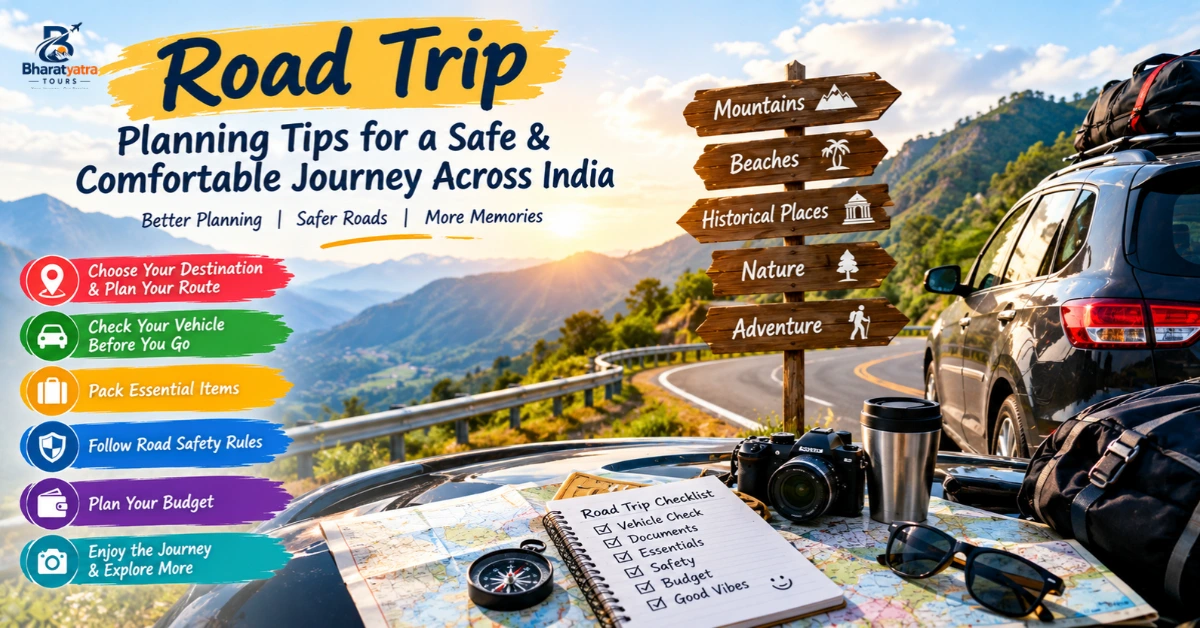
Introduction
A road trip is one of the most exciting ways to explore India. From beautiful mountains and peaceful beaches to historical cities and green countryside roads, India offers countless destinations for travellers. Whether you are planning a family vacation, a weekend getaway with friends, or a long-distance journey, travelling by road gives you the freedom to explore different places at your own pace.
However, a successful road trip requires proper planning, preparation, and safety precautions. Choosing the right route, checking your vehicle, packing essential items, and understanding road conditions can make your journey more comfortable and enjoyable. In this guide, Bharat Yatra Tours shares some useful tips to help you plan a safe and comfortable road trip across India.
1. Choose Your Destination and Plan Your Route
The first step in planning a road trip is selecting your destination. Consider your travel budget, available time, weather conditions, and the interests of everyone travelling with you.
India has many beautiful road trip destinations, including:
- Manali and Shimla for mountain lovers.
- Jaipur and Udaipur for history and culture.
- Rishikesh and Haridwar for spiritual experiences.
- Agra for historical monuments.
- Nainital and Jim Corbett for nature and wildlife.
After selecting your destination, research the available routes using reliable navigation applications. Check the total distance, estimated travel time, toll charges, fuel stations, restaurants, and rest stops along the way.
Always keep an alternative route ready in case of traffic, road closures, or unexpected weather conditions.
2. Check Your Vehicle Before Starting the Journey
Vehicle inspection is one of the most important steps before beginning a road trip. A well-maintained vehicle reduces the chances of breakdowns and makes travelling safer.
Before departure, check the following:
- Tyres: Check tyre pressure, tread condition, and the spare tyre.
- Brakes: Make sure the braking system is working properly.
- Engine Oil: Check the engine oil level and schedule servicing if required.
- Coolant: Ensure the engine cooling system has sufficient coolant.
- Lights: Test headlights, indicators, brake lights, and parking lights.
- Battery: Check the battery condition and connections.
- Air Conditioning: Ensure the AC is working properly, especially during summer.
If you are travelling in a taxi or rental vehicle, confirm that it has been properly serviced and inspected before departure.
3. Pack Essential Items for a Comfortable Journey
Packing the right items can make your road trip more convenient. Avoid carrying unnecessary luggage, but make sure you have everything required for emergencies and daily travel.
Some important items include:
- Drinking water bottles.
- Healthy snacks and dry fruits.
- First-aid kit and basic medicines.
- Mobile phone chargers and power banks.
- Driving licence and vehicle documents.
- Sunglasses, sunscreen, and personal hygiene products.
- Comfortable clothes and extra footwear.
- Emergency torch and basic repair tools.
For family trips, carry additional items for children and elderly passengers according to their needs.
4. Follow Important Road Safety Rules
Safety should always be your top priority during a road trip. Indian highways can have different driving conditions, including heavy traffic, sharp turns, narrow roads, and unexpected obstacles.
Follow these important safety rules:
- Always wear a seat belt while travelling.
- Follow speed limits and traffic signs.
- Never use a mobile phone while driving.
- Avoid driving under the influence of alcohol.
- Maintain a safe distance from other vehicles.
- Use indicators before changing lanes or turning.
- Avoid sudden braking and risky overtaking.
- Follow local traffic rules and road restrictions.
If you are travelling through hilly areas such as Manali, Shimla, or Uttarakhand, drive carefully on narrow roads and sharp curves. Avoid unnecessary overtaking and follow local weather and road advisories.
5. Plan Your Budget Before Travelling
Budget planning helps you manage travel expenses and avoid unnecessary financial stress during your journey.
Your road trip budget should include:
Fuel Expenses: Estimate fuel costs according to t